API Abroad:
Brand & Website Redesign for Experiential Learning
A full-scale brand and digital refresh designed to modernize API’s identity, improve the user experience, and improve scalability across marketing channels.

Company

Academic Programs International (API) helps college students study abroad. They offer programs in many countries, with a wide range of classes, internships, and special activities. These experiences help students get more out of college and prepare for their future careers.
Overview
Industry: Higher Education / Study Abroad
Timeline: Jan – May 2021 (4 months), ongoing priojects
Team: SVP of Marketing & Enrollment, Marketing Team, Product Team
My Role
Lead Brand & Web Designer
I led the redesign from concept through launch, including:
- Brand identity refresh
- Content architecture strategy
- High-fidelity UI design in Figma
- WordPress (Divi) implementation
- Creation of scalable page templates
- Marketing collateral rollout
- Stakeholder alignment & presentation
This was a cross-functional initiative executed on a compressed four-month timeline.
Project Summary
API Abroad’s brand and digital experience no longer aligned with the expectations of today’s students. An outdated visual identity and complex site structure created friction in the enrollment journey and limited internal scalability.
This initiative focused on modernizing the brand, restructuring content architecture, and improving usability across mobile and desktop experiences. The goal was not just aesthetic refinement, but a clearer and more conversion-ready digital framework.
In four months, we delivered a fully refreshed brand system and responsive website designed to reduce navigation friction, clarify program pathways, and support long-term growth.
Before/After Home Page


Before/After Students Page


Before/After About Us Page


The Challenge
API’s brand and website no longer aligned with the expectations of modern students.
Key issues included:
- Outdated visual identity
- Inconsistent messaging
- Complex navigation structure
- Limited mobile optimization
- Heavy reliance on manual page builds internally
The organization needed a refreshed identity and digital experience that would better resonate with students and improve enrollment inquiries.
The Strategy
Rather than treating this as a visual refresh alone, I approached it as a brand + systems redesign.
Goals:
- Modernize the identity without losing brand equity
- Clarify program pathways and update outdated content
- Simplify navigation and reduce cognitive load
- Improve scalability for internal marketing teams
- Create a flexible design system usable across web and print
The Process
This project consisted of 6 phases:
Phase 1: Logo Redesign
The legacy logo was visually dense and lacked flexibility across digital applications.
I refined the typography for clarity and accessibility, simplified the mark, and retained the globe element to preserve global brand recognition.
The updated logo system included:
- Primary and secondary lockups
- Social-ready variations
- Accessibility-conscious contrast improvements
- Flexible usage across digital and environmental applications


Phase 2: Brand Concept — “Transformation Out of the Box”
The conceptual foundation centered on growth through global exposure.
The “Out of the Box” metaphor informed:
- Layered layout treatments
- Offset framing elements
- Structured yet dynamic grid systems
- A balance of bold typography and experiential photography
This visual system created a cohesive language that extended across digital and physical environments.
Mood + Concept References

Visual Inspiration Used to Develop the Brand Concept
Colors

Typography

Phase 3: Content Architecture & Page Structure
To maintain velocity within the tight timeline, we prioritized rapid structural alignment over traditional multi-round wireframing.
We focused on:
- Clarifying primary decision pathways
- Reducing navigation friction
- Establishing content hierarchy before visual styling
- Creating low-fidelity structural layouts to validate flow
This allowed us to make informed layout decisions quickly while maintaining forward momentum toward design and development.


Phase 4: UI Design in Figma
With structure defined, I designed high-fidelity layouts in Figma beginning with core conversion pages.
Design priorities:
- Easy to follow navigation
- Mobile-first responsiveness
- Strong visual hierarchy
- Clear CTAs
- Modular content blocks
- Distinct but reusable components
The overlapping text treatments and structured framing elements became part of the scalable brand system — not just page decoration.
Home Page Design


Country Page Design


Phase 5: Scalable WordPress Implementation & Templates
In addition to building out the final designs in WordPress, I created a flexible page template system using Divi to help the team create new pages quickly and consistently.
This included:
- Modular CTA blocks
- Editorial content sections
- Feature comparison layouts
- Image-led program templates
- Reusable landing page structures
The result was a scalable framework that allowed the internal team to build new pages without breaking brand consistency.
This significantly reduced reliance on custom design support post-launch.


Phase 6: Brand Rollout & Environmental Extensions
Following the website launch, the updated brand system was deployed across a full spectrum of marketing channels — from large-scale environmental applications to everyday campaign materials.
This rollout ensured alignment across:
- Physical environments
- Recruitment marketing materials
- Social campaigns
- Event presence
- Online digital marketing
Rather than designing individual pieces in isolation, this phase focused on reinforcing a unified visual language across touchpoints. The result was a brand that felt consistent, scalable, and immediately recognizable — whether experienced online, at a conference, or through printed materials.
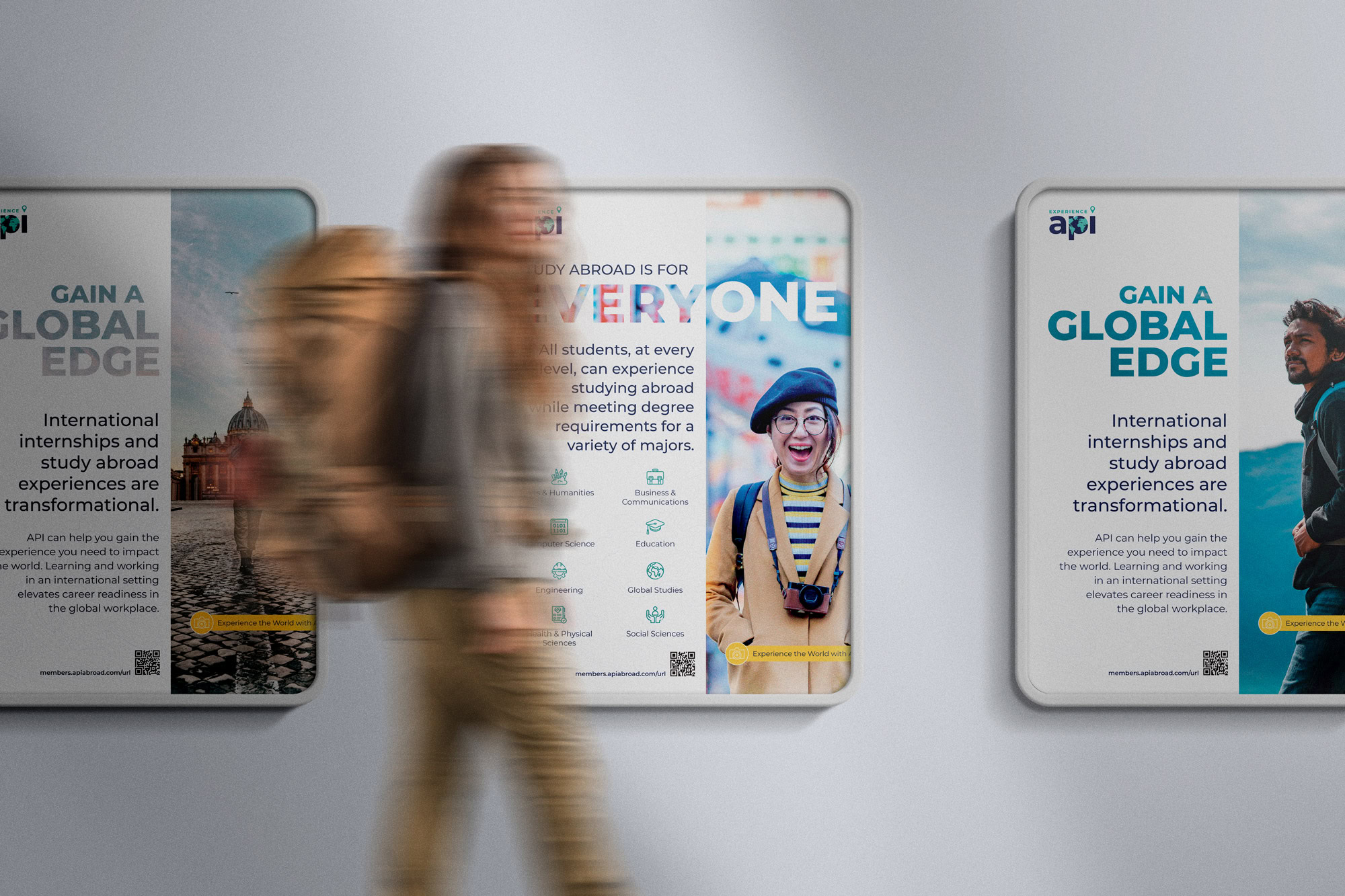
Campus Poster Series — Study Abroad & Internships
Designed a cohesive poster series for university campuses to promote API’s study abroad and internship programs. The layouts extended the website’s typography and text treatments into large-scale print applications, ensuring brand consistency across digital and physical touchpoints while maintaining strong hierarchy and legibility in high-traffic campus environments.
NAFSA Annual Conference — Environmental Graphics & Brand Extension
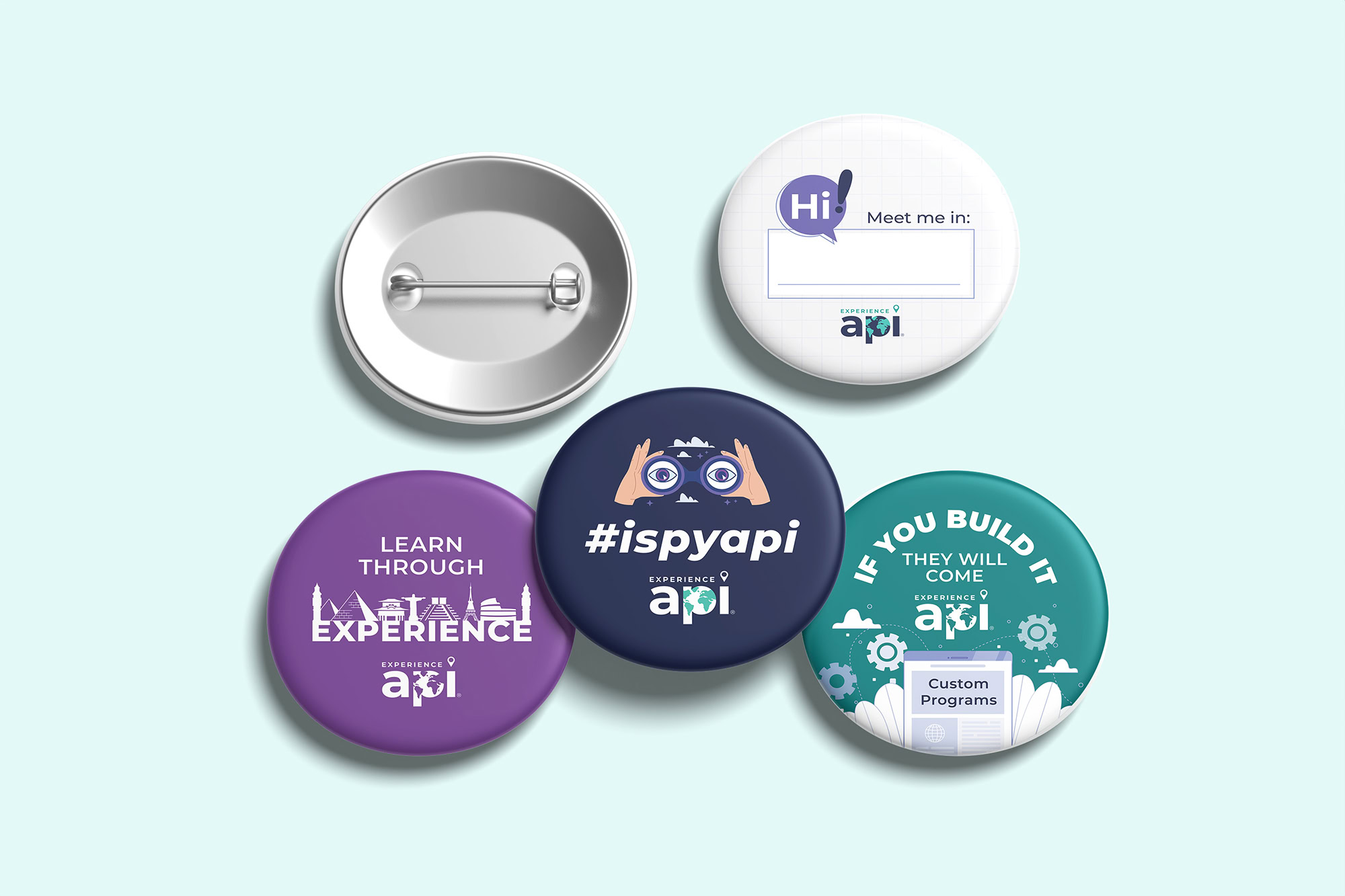
Designed the large-format environmental graphics for API’s annual NAFSA Conference booth, extending the refreshed brand into a global higher-education setting. In collaboration with the Marketing Director and Elevation3D (who developed the 3D booth structure), I created the panel graphics and messaging system applied throughout the space. I also designed supporting swag and collateral — including pins, tote bags, and printed booklets. I have also contributed to the booth experience for 4 consecutive years, evolving the graphic theme annually while maintaining brand consistency.



Transit Bus Wrap — University-Focused Internship Promotion
Designed a large-scale transit bus wrap to promote API’s internship programs at targeted university campuses. The concept highlighted European destinations through bold landmark illustrations and scholarship-forward messaging to capture attention in high-traffic student areas.
The design balanced legibility at scale with strong brand visibility, ensuring the core message — “Study or Intern Abroad” — remained clear from a distance while reinforcing API’s global positioning.

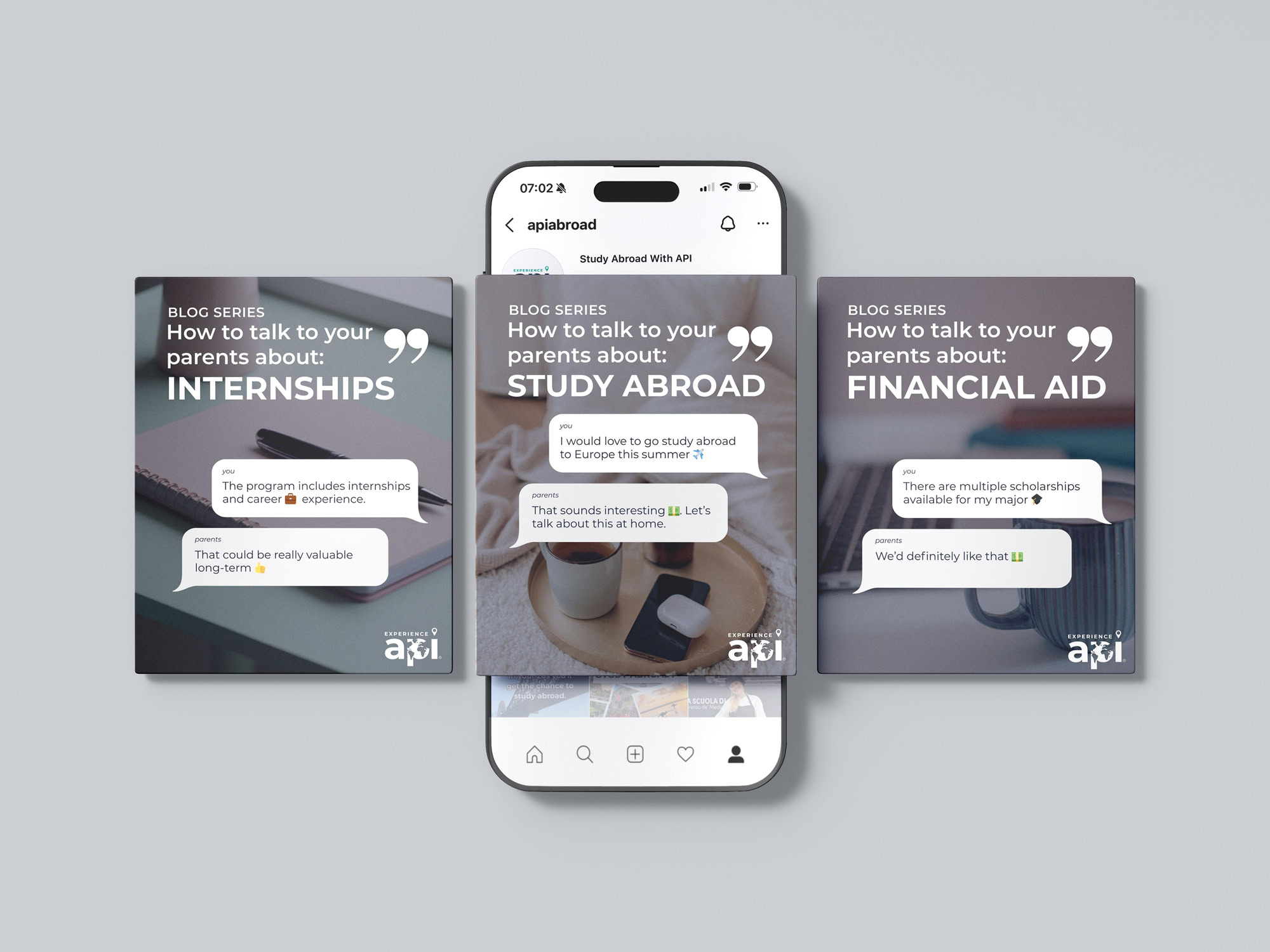
Instagram Blog Series Template
Designed a modular social template to promote API’s blog series targeted at college students navigating conversations about studying abroad. The concept reframed common parental concerns — internships, financial aid, program value — using conversational dialogue to mirror real-life text exchanges.
The template system allowed the marketing team to easily update headlines and imagery while maintaining brand consistency across posts.
Results
Due to limited historical analytics access, direct before-and-after comparisons were unavailable. However, post-launch indicators and stakeholder feedback showed:
- Improved mobile performance and load efficiency
- Strong positive feedback from executive leadership
- Increased engagement and improved user experience
- Streamlined internal page creation workflows
- Greater brand consistency across marketing channels
Most notably, the internal team gained a scalable system rather than a one-off redesign.
Reflections
This project reinforced the importance of aligning brand, UX, and operational scalability — not treating them as separate disciplines.
Starting with content architecture before visual design reduced friction later in the process. Building with internal scalability in mind created long-term value beyond aesthetics.
If continuing iteration, I would explore:
- Analytics benchmarks
- A/B testing for content and design
- Iterative designs based on A/B testing
- Deeper brand consistency between front end website and product UI
- Deeper personalization pathways for personas
Paid Social Video Campaign — Internship Recruitment
Designed a series of paid Instagram video ads to drive qualified student applications for API’s newly launched U.S.-based internship program — a strategic expansion beyond their traditional study abroad offerings.
The creative emphasized API’s differentiator — career-aligned placements, move-in-ready housing, and built-in professional support — positioning the program as a clear, low-friction pathway to gaining real-world experience.